

Clear aligners have changed the way many teens and adults think about orthodontic treatment. Instead of brackets and wires, this modern approach uses a series of custom, removable trays to guide teeth into healthier, more balanced positions over time.
For people with mild to moderate crowding, small gaps, or bite concerns, clear aligners may offer a discreet and convenient path toward improved alignment. Understanding how they work can help patients feel more confident when discussing treatment options with an orthodontic provider.
Why Tooth Position Affects More Than Appearance
Straight teeth can contribute to a more confident smile, but tooth alignment is also closely connected to oral health and daily function. When teeth are crowded, spaced too far apart, or positioned in a way that prevents the upper and lower teeth from fitting together properly, the mouth may be harder to clean and less efficient when biting or chewing.
Crowded teeth can create tight spaces where plaque and food particles become trapped. These areas may be difficult to reach with a toothbrush or floss, which can increase the risk of cavities, gum inflammation, and uneven wear. Even small alignment problems can sometimes place extra pressure on certain teeth, leading to discomfort or changes in the way the bite feels.
Gaps between teeth can also affect oral health and function. While some spacing is purely cosmetic, larger or uneven gaps may allow teeth to shift, create food traps, or contribute to gum irritation. In some cases, spacing is related to tooth size, jaw size, missing teeth, or habits that influence tooth movement over time.
How Clear Aligners Guide Teeth Into Better Positions
Clear aligner treatment begins with a detailed evaluation of the teeth, gums, jaws, and bite. Digital scans or impressions are used to create a treatment plan that maps out how each tooth should move. Rather than moving all teeth at once, aligners are designed to apply controlled pressure to specific teeth at specific stages.

Each set of aligners is slightly different from the one before it. As the patient wears the trays as directed, the aligners gently encourage teeth to shift according to the planned sequence. After a certain amount of time, the patient changes to the next set, continuing the gradual movement toward the desired alignment.
Improving Crowding With Planned Tooth Movement
When teeth are crowded, there is not enough room for them to sit in proper alignment. Clear aligners may help by gradually rotating, tipping, or shifting teeth into a more organized position. In some cases, the orthodontic plan may also include creating very small amounts of space between selected teeth or expanding the arch within appropriate limits.
The success of crowding correction depends on the severity of the crowding and the health of the surrounding bone and gums. Mild to moderate crowding is often well suited for aligner therapy, while more complex cases may require additional orthodontic techniques or a different treatment approach.
Closing Gaps and Managing Spacing
Clear aligners can also be used to close certain types of gaps between teeth. These spaces may appear between the front teeth, along the sides of the smile, or in multiple areas throughout the arch. With a carefully planned sequence of aligners, teeth can be moved closer together while maintaining a balanced bite and natural-looking tooth positions.
Spacing treatment is not always as simple as pushing teeth together. An orthodontic provider must evaluate why the gaps exist in the first place. For example, gaps may be caused by small teeth, missing teeth, a tongue habit, gum tissue attachment, or differences between jaw size and tooth size. If the cause is not addressed, spaces may be more likely to reopen after treatment.

In some cases, clear aligners may be combined with cosmetic or restorative dentistry after orthodontic movement is complete. If teeth are naturally undersized, closing every space with movement alone could make the smile or bite look uneven. A coordinated plan may involve aligning the teeth first, then using bonding, veneers, or other restorations to improve tooth shape and proportion.
How Clear Aligners Can Improve Bite Alignment
Bite alignment refers to the way the upper and lower teeth come together. A healthy bite helps distribute chewing forces evenly, protects teeth from excessive wear, and supports comfortable jaw function. When the bite is off, certain teeth may absorb more pressure than they should, which can contribute to chipping, grinding wear, sensitivity, or jaw muscle strain.
Clear aligners can help improve some bite problems by guiding teeth into positions that allow the upper and lower arches to fit together more effectively. Treatment may involve moving front teeth, back teeth, or both. The plan must account for how each movement affects the entire bite, not just the appearance of individual teeth.
Overbite Correction
An overbite occurs when the upper front teeth overlap the lower front teeth more than ideal. A slight overlap is normal, but a deep overbite may cause the lower teeth to bite into the backs of the upper teeth or into the gum tissue behind them. It can also contribute to excessive wear on the front teeth.
Clear aligners may help improve a deep overbite by repositioning front teeth, adjusting back tooth contacts, or creating better vertical balance in the bite. Some treatment plans use special aligner features, such as bite ramps, to help guide the lower teeth and encourage a more favorable bite relationship.
Overjet Correction
Overjet describes the horizontal distance between the upper front teeth and lower front teeth. When the upper teeth sit too far forward, the front teeth may be more vulnerable to injury, and lip closure may feel strained. Patients may also feel self-conscious about the prominence of the upper teeth.
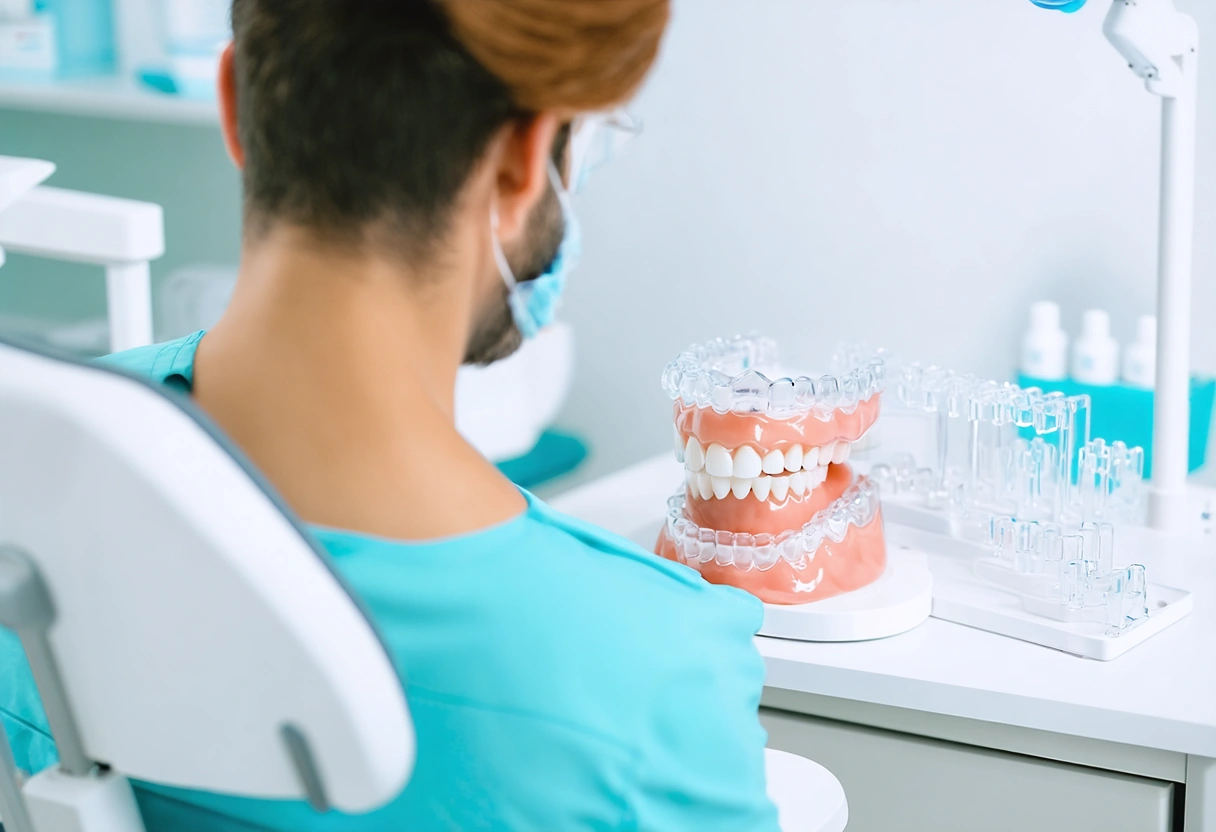
Clear aligners may improve mild to moderate overjet by moving upper teeth back, lower teeth forward, or a combination of both, depending on the patient’s bite and facial profile. In growing patients, orthodontic treatment may also consider jaw development, while adult treatment focuses on tooth movement within the existing jaw structure.
Underbite, Crossbite, and Open Bite Concerns
An underbite occurs when the lower front teeth sit ahead of the upper front teeth. A crossbite happens when some upper teeth bite inside the lower teeth instead of outside them. An open bite means certain teeth do not meet when the mouth is closed, often leaving a space between the upper and lower front teeth or back teeth.
Clear aligners may help with selected underbite, crossbite, and open bite cases, especially when the problem is related mainly to tooth position rather than jaw size. For example, a single tooth in crossbite may be guided into better alignment with trays and attachments. More complex bite problems may require elastics, additional appliances, braces, or surgical evaluation in severe skeletal cases.
The Role of Attachments, Elastics, and Other Aligner Features
Although clear aligners may look simple, many treatment plans use small supporting features to make tooth movement more predictable. Attachments are tooth-colored shapes bonded to selected teeth. They give the aligners a better grip, allowing them to apply forces for movements such as rotations, root control, or vertical adjustments.
Elastics may also be used with clear aligners to improve how the upper and lower teeth fit together. These small rubber bands connect to precision cuts in the aligners or to small buttons attached to the teeth. When worn as directed, elastics can help correct bite relationships by applying gentle force between the upper and lower arches.

Other features may include bite ramps, pressure points, or planned spaces that support specific movements. These details are one reason professional planning is so important. The aligners must be designed not only to straighten teeth, but also to create a stable and functional bite.
What Makes a Good Candidate for Clear Aligners?
Clear aligners are often a strong option for patients with mild to moderate crowding, spacing, and bite concerns. Good candidates typically have healthy teeth and gums, a commitment to wearing aligners consistently, and orthodontic needs that can be addressed with removable trays.
Because aligners can be removed, patient cooperation is essential. Most plans require aligners to be worn for the majority of the day and night, removing them only for eating, drinking anything other than water, brushing, and flossing. If aligners are not worn long enough each day, teeth may not move as planned, and treatment can take longer or become less predictable.
Patients with active gum disease, untreated cavities, severe bite discrepancies, or complex tooth movement needs may need additional care before or during aligner treatment. An orthodontic evaluation helps determine whether aligners are appropriate or whether another approach would produce a safer and more stable result.
Daily Life With Clear Aligners
One of the main benefits of clear aligners is that they fit easily into many daily routines. Since the trays are removable, patients can continue eating most of their usual foods without the dietary restrictions often associated with brackets and wires. Removing the aligners for meals also helps prevent damage and staining.

Oral hygiene is typically simpler with aligners than with fixed braces because there are no brackets to clean around. Patients can brush and floss normally, then clean the aligners before placing them back in the mouth. This makes it easier to maintain healthy gums and reduce plaque buildup throughout treatment.
Some temporary pressure or soreness is normal when starting a new set of aligners. This sensation usually means the trays are applying force to guide tooth movement. Speech may also feel slightly different at first, but most patients adapt after a short adjustment period.
Why Retainers Matter After Aligner Treatment
After crowding, gaps, or bite issues have been improved, retainers help preserve the new tooth positions. Teeth naturally have a tendency to shift over time, especially in the months immediately after active treatment.
Retainers may be removable or fixed, depending on the patient’s needs and the provider’s recommendation. A removable retainer is usually worn according to a specific schedule, often full time at first and then only at night.
Long-term retainer wear is an important part of protecting the investment made in orthodontic treatment. Patients who follow their retention plan are more likely to maintain a straighter smile and a more stable bite for years to come.
Need help with How Clear Aligners Can Improve Crowding, Gaps, and Bite Alignment?