A missing tooth can affect far more than the appearance of your smile. Even one open space may change how you chew, speak, and distribute biting pressure.
Fortunately, modern restorative dentistry offers several reliable ways to rebuild comfort, function, and confidence. Dental implants, bridges, and dentures each serve different needs, and the right choice depends on factors such as oral health, bone support, the number of missing teeth, lifestyle, and personal preferences.
Why replacing missing teeth supports long term oral health
Every tooth plays a role in maintaining a balanced bite. When a tooth is lost, the remaining teeth may begin carrying additional pressure or drifting toward the empty space.
Tooth loss can also affect the jawbone. Natural tooth roots stimulate the surrounding bone during chewing. Without that stimulation, the bone in the open area may slowly shrink.
Replacing missing teeth helps restore a more complete chewing surface and supports clearer speech, comfortable eating, and a natural looking smile. At Soleil Dental Studio in North Port, Dr.
What determines the best tooth replacement option?
The ideal restoration is different for every patient. Important considerations include the location and number of missing teeth, the condition of neighboring teeth, gum health, jawbone density, bite alignment, medical history, and daily care habits.
A comprehensive examination and modern diagnostic imaging can reveal details that are not visible during a routine visual assessment. By reviewing these findings together, patients can better understand the benefits, limitations, maintenance needs, and expected longevity of each option before moving forward.
Dental implants: A stable replacement designed to function like a natural tooth
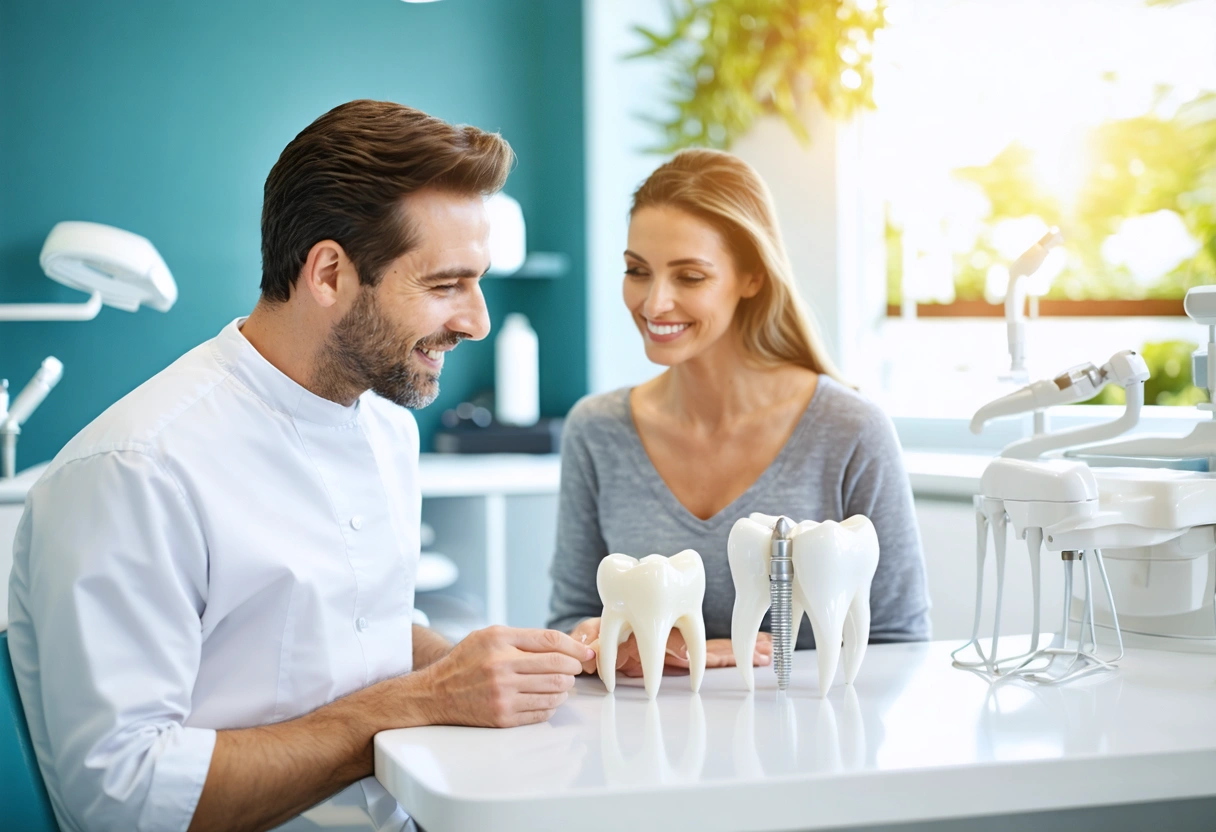
A dental implant is a small post placed into the jawbone to replace the root of a missing tooth. After the area heals and the implant becomes stable within the bone, it can support a custom dental crown.
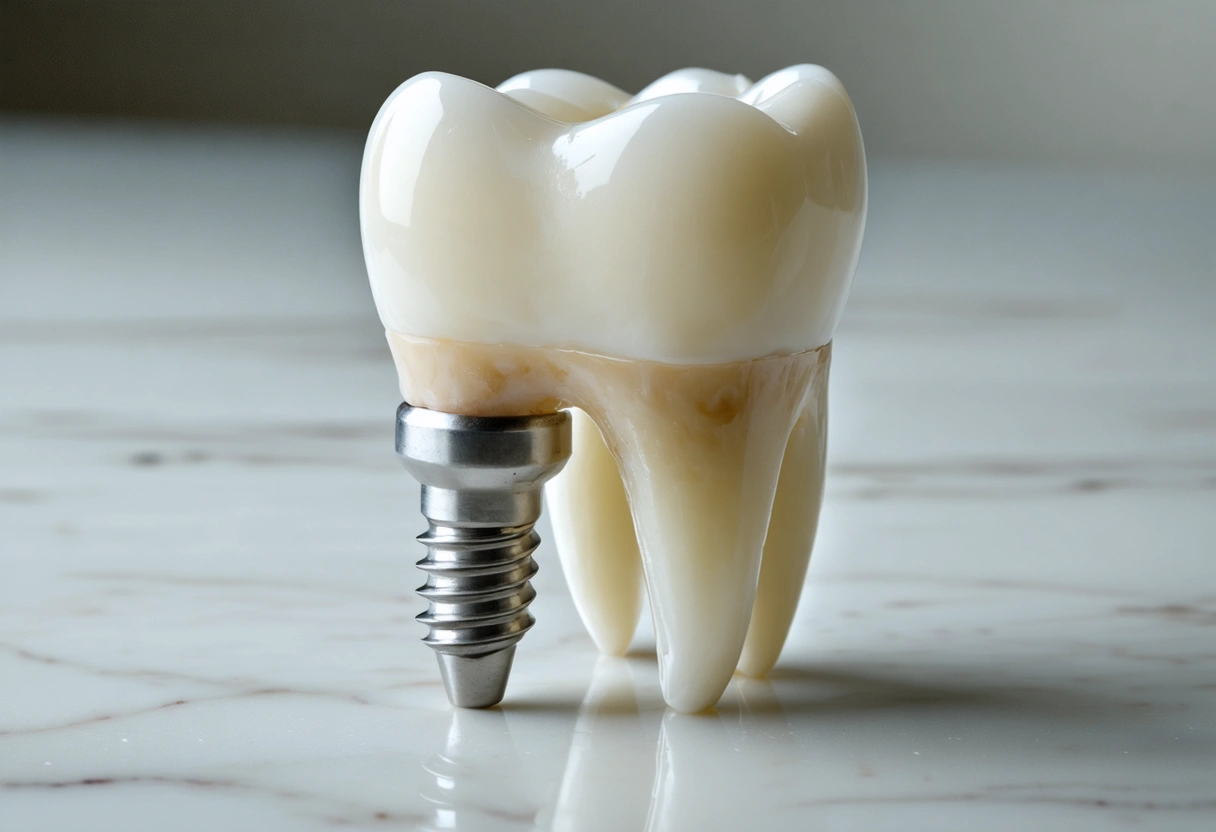
Because implants replace tooth roots, they provide strong support without requiring adjacent healthy teeth to hold the restoration. They also stimulate the jawbone during normal biting and chewing, which helps preserve bone in the treated area.
Who may be a candidate for dental implants?
Many adults with missing teeth may be considered for implant treatment, but healthy gums and sufficient bone support are important. Patients should also be able to maintain consistent home care and attend routine dental visits.
If bone volume has decreased, additional procedures may sometimes be recommended to create a stronger foundation for an implant. Careful planning helps determine whether implant treatment is appropriate and how to achieve a result that feels comfortable, functions predictably, and blends naturally with the surrounding smile.
What to expect from the implant process
Dental implant care typically occurs in stages. The process may include digital imaging, treatment planning, implant placement, a healing period, and the creation of a personalized final restoration.
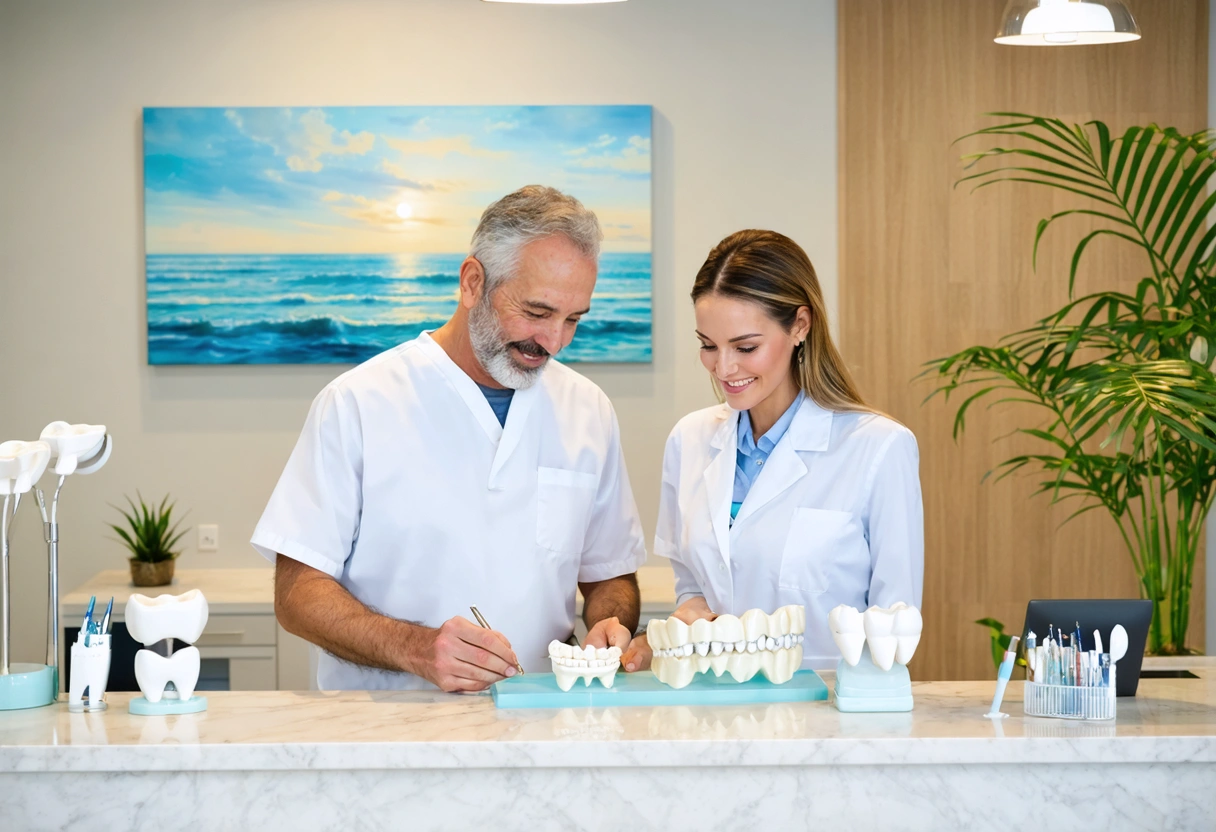
At Soleil Dental Studio, comfort and clear communication remain central throughout restorative care. In a serene, ocean inspired setting, the team takes time to explain each stage and answer questions so patients can feel informed and at ease while rebuilding their smiles.
Dental bridges: A fixed restoration supported by neighboring teeth
A dental bridge replaces one or more missing teeth by placing a lifelike artificial tooth, called a pontic, within the open space. Traditional bridges are held securely by dental crowns placed over the teeth on either side of the gap.
Bridges can restore chewing function, support balanced biting pressure, and prevent nearby teeth from drifting out of alignment. Each restoration is carefully designed to complement the color, shape, proportion, and translucency of the surrounding teeth, creating a result that looks natural within the complete smile.
When might a dental bridge be appropriate?
A bridge may be a suitable choice when one or several adjacent teeth are missing and the supporting teeth are healthy enough to hold the restoration.
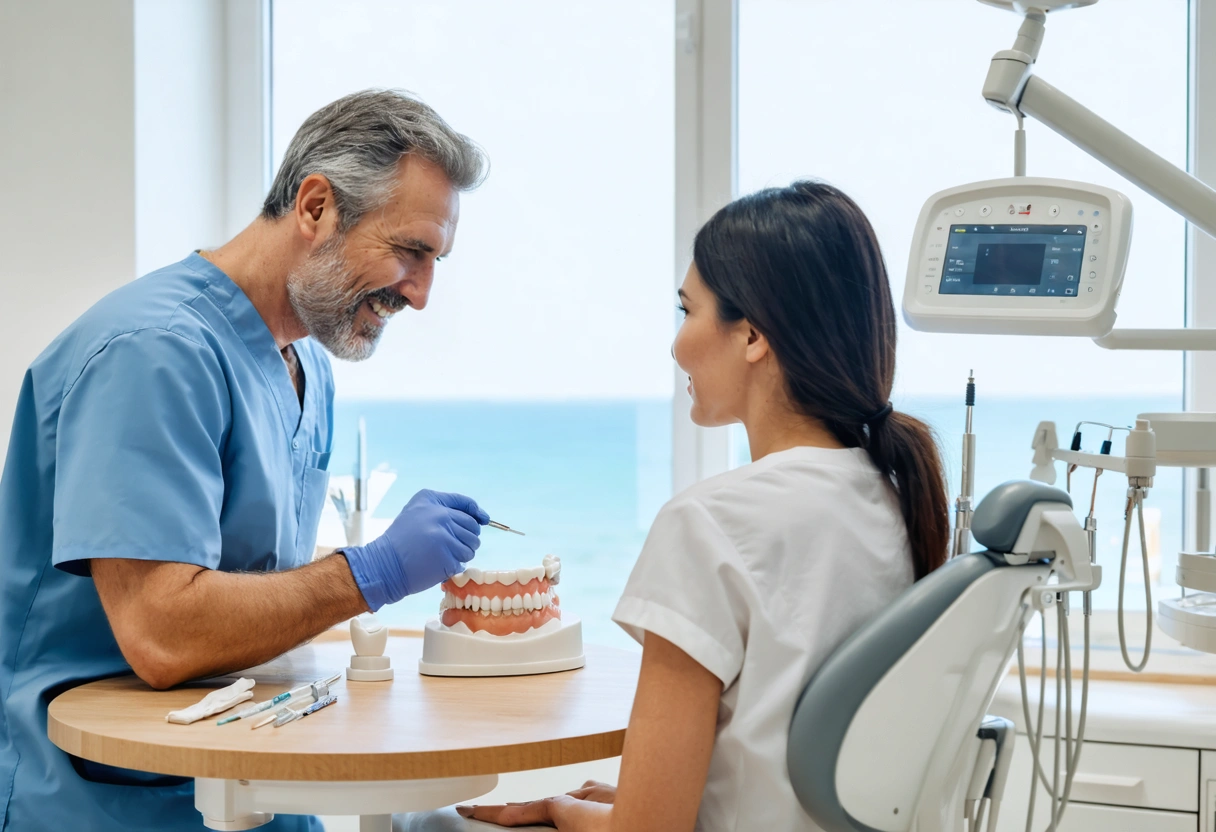
Unlike an implant, a traditional bridge does not require a surgical placement procedure or a healing period within the jawbone. Treatment is often completed more quickly, although the exact timeline depends on the condition of the supporting teeth and whether other restorative care is required.
A bridge does require the supporting teeth to be reshaped for crowns. For that reason, the health and structure of those teeth should be evaluated carefully.
How are dental bridges maintained?
Brushing twice daily and cleaning beneath the replacement tooth are essential for protecting the supporting teeth and nearby gums. A floss threader, interdental brush, or water flosser may make cleaning under the bridge easier.
Routine examinations allow the dentist to evaluate the bridge, supporting teeth, bite, and gum tissue. With consistent care and attention to habits such as clenching, grinding, or chewing hard objects, a well designed bridge can provide many years of comfortable service.
Dentures: Versatile solutions for multiple or complete tooth loss
Dentures are removable restorations designed to replace several missing teeth or an entire arch of teeth. Modern dentures can be customized with careful attention to tooth shape, color, positioning, gum contours, facial support, and bite balance.
There are several types of dentures, and each serves a different clinical need. A detailed evaluation can help determine which design offers the most appropriate combination of appearance, comfort, stability, and ease of maintenance.
Partial dentures
A partial denture replaces multiple missing teeth when some healthy natural teeth remain. The restoration generally includes replacement teeth attached to a gum colored base and a framework or other components that help secure it within the mouth.
Partial dentures can be a practical option when missing teeth are located in different areas or when a fixed bridge is not ideal. They also help keep remaining teeth from shifting into open spaces.
Complete dentures
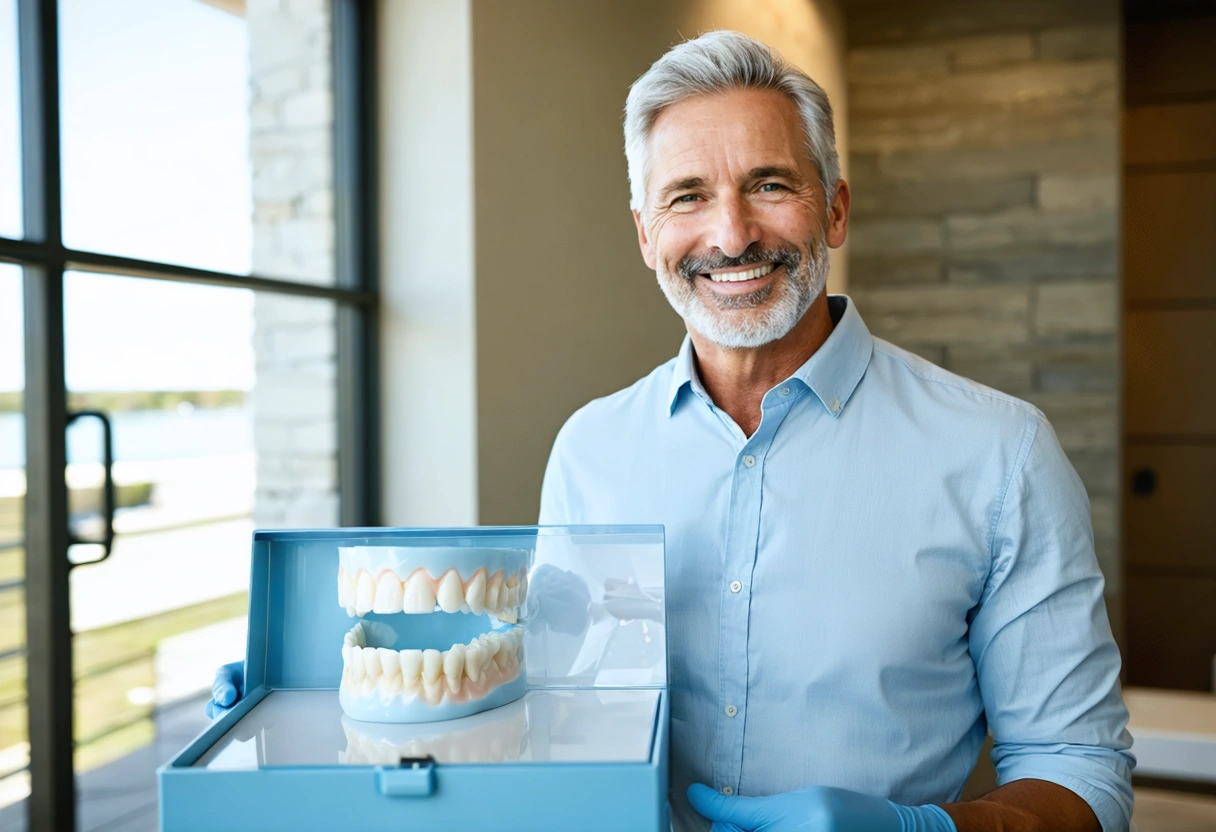
Complete dentures replace all teeth in the upper arch, lower arch, or both. Upper dentures often gain support from the palate and gum tissue, while lower dentures rest on the jaw ridge and may require additional adaptation because of tongue and muscle movement.
Creating a comfortable complete denture involves more than selecting attractive teeth. Precise impressions, bite measurements, facial proportions, lip support, and speech patterns all influence the final design.
Immediate dentures
An immediate denture may be placed on the same day that remaining teeth are removed, allowing the patient to avoid going without teeth during early healing.
This option requires careful planning before tooth removal. Patients should understand that the initial fit will evolve and that follow up visits are an important part of maintaining comfort and function.
Implant supported dentures
Dental implants can be used to improve the retention and stability of certain dentures. Depending on the treatment plan, an implant supported restoration may attach to implants and remain removable by the patient, or it may be secured in place and removed only by a dental professional.
Greater stability can make it easier to speak and chew with confidence while reducing unwanted movement. Implants can also help preserve bone in the areas where they are placed.
Comparing dental implants, bridges, and dentures
Each tooth replacement option offers meaningful benefits. Dental implants provide root level support and can replace a single tooth without reshaping neighboring teeth. Bridges offer a fixed solution that may be completed more quickly and can be especially useful when adjacent teeth already need crowns.
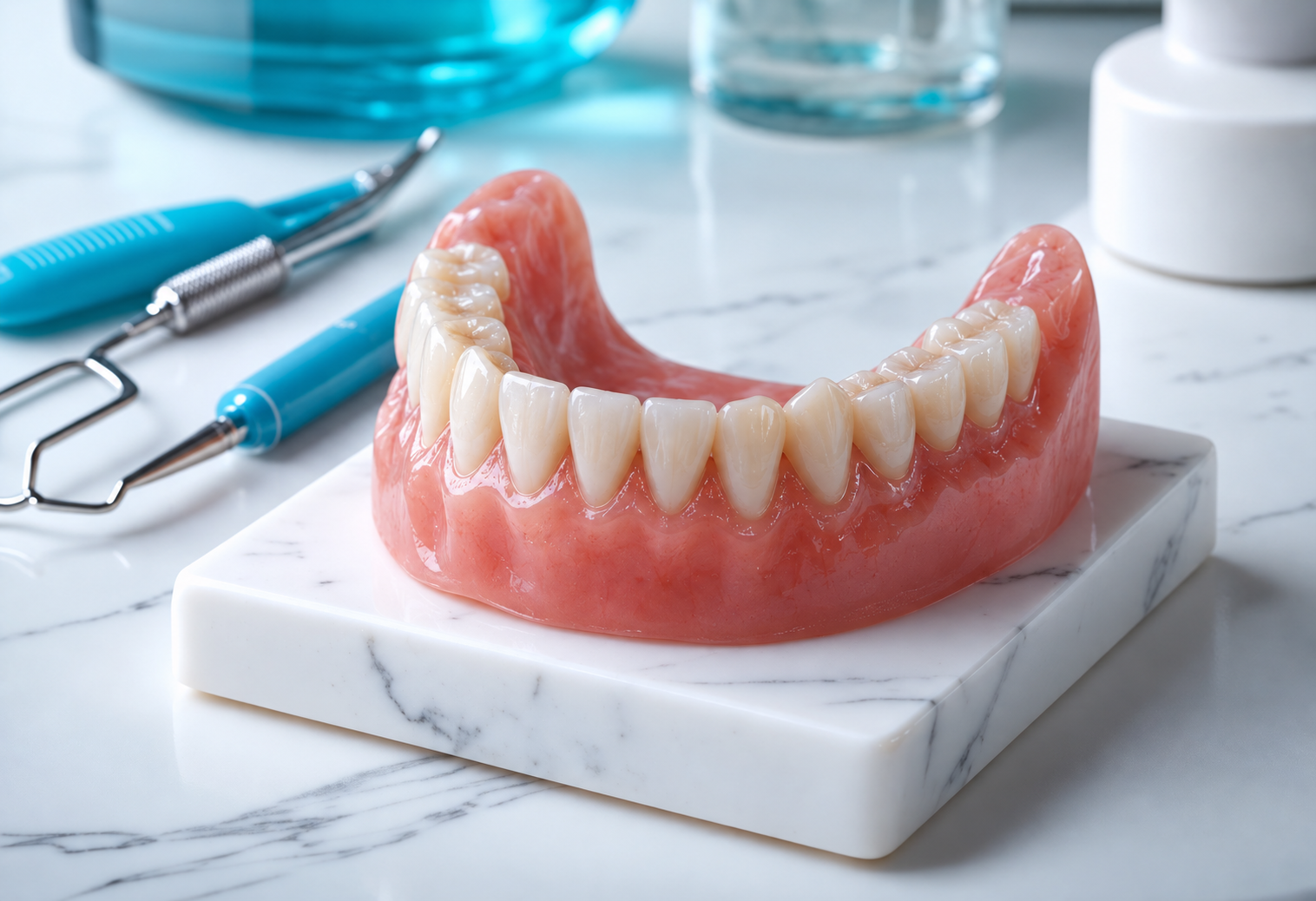
The best choice is not always the option with the longest potential lifespan or the shortest treatment timeline. It is the restoration that fits the patient’s oral health, anatomy, comfort preferences, daily routine, and long term goals.
Stability and chewing comfort
Implant restorations generally provide the greatest degree of stability because they are anchored within the jawbone. Fixed bridges also offer dependable chewing support through the neighboring teeth.
Implant supported dentures can provide an added sense of security for patients who are concerned about movement. Regardless of the restoration selected, balanced bite design is important for comfort and for protecting the remaining teeth and supporting tissues.
Treatment time and healing
A traditional bridge can often be completed within several appointments after the supporting teeth are prepared. Denture timelines vary depending on whether teeth need to be removed and whether the tissues must heal before final impressions are taken.
Implant treatment usually requires more time because the implant must become stable within the bone before receiving its final restoration. In selected situations, a temporary restoration may be possible during healing.
Effect on surrounding teeth and bone
A single dental implant generally does not require alteration of healthy neighboring teeth and can help maintain bone around the implant site. A traditional bridge relies on adjacent teeth for support and does not replace the missing root.
These anatomical changes can influence how a restoration fits in the future. Periodic examinations help identify changes early and allow adjustments or maintenance to be completed before discomfort or damage develops.
Daily care requirements
Implant crowns should be brushed and cleaned around the gumline much like natural teeth. Bridges require additional cleaning beneath the replacement tooth. Removable dentures should be cleaned daily with appropriate products and generally removed while sleeping unless the dentist provides different instructions.
None of these restorations is maintenance free. Gum disease, decay around supporting teeth, excessive bite pressure, and inconsistent professional care can shorten the life of a restoration.
What happens if tooth replacement is delayed?
Some patients adapt to a missing tooth and may not notice immediate problems. However, gradual tooth movement, bone loss, and bite changes can make future treatment more complex.
Prompt evaluation does not necessarily mean treatment must begin immediately. It allows the dentist to document current conditions, discuss timing, and preserve as many options as possible.
Planning a restoration that feels natural
Successful tooth replacement depends on more than filling an empty space. The restoration should fit comfortably, support a balanced bite, and harmonize with the surrounding teeth and facial features.
Dr. Rudy Carballo, Dr. Valentina Barrucci, and the Soleil team combine advanced diagnostics with an artistic eye to develop individualized treatment plans. Every recommendation considers oral health, wellness, comfort, and the patient’s vision for their smile.
Questions to ask during your consultation
Patients may wish to ask which options are appropriate, how long treatment may take, whether preparatory procedures are needed, and what maintenance each restoration requires.
Replacing missing teeth is a personal decision, and clear information makes that decision easier. In Soleil Dental Studio‘s calming, ocean inspired environment, patients in North Port and surrounding communities can explore their options without pressure and feel confident choosing care that supports a healthy, complete smile for years to come.
Need help with Replacing Missing Teeth: Dental Implants, Bridges, and Dentures Explained?